On 10/13/2020, the CFPB issued a consent order against Nissan Motor Acceptance Corporation for a number of issues relating to debt collection and repossession practices. In their release, the CFPB found that Nissan:

  • wrongfully repossessed vehicles;

  • kept personal property in consumers’ repossessed vehicles until consumers paid a storage fee;

  • deprived consumers paying by phone of the ability to select payment options with significantly lower fees; and,

  • in its loan extension agreements, made a deceptive statement that appeared to limit consumers’ bankruptcy protections.

In their release, the CFPB asserts that these practices resulted in UDAAP violations and the consent order requires Nissan to provide up to $1 million of cash redress to affected consumers, credit any outstanding account charges associated with wrongful reposession, and to pay a CMP of $4 million.

On 10/5/2020, the joint agencies (OCC, FDIC, NCUA, Federal Reserve, and FinCEN) issued an order to exempt CIP (customer identification program) requirements for loans extended by banks to facilitate purchases of property and casualty insurance policies. This order comes after a group of banks jointly submitted letters in 2016 and 2017 requesting an exemption or interpretation regarding the application of the CIP rules to insurance premium finance lending. These letters asserted that CIP was not needed for insurance premium finance lending because this activity presents a very low risk of money laundering because of the purpose for which the loans are extended and the limitations on the ability of a customer to use such funds for any other purpose. On 9/27/18, an initial exemption was granted by the joint agencies specifically for commercial customers. This new order extends the exemption to all customers, not just commercial customers.

On 10/8/20, the Small Business Administration (SBA) released a simpler loan forgiveness application for Paycheck Protection Program (PPP) loans of $50,000 or less. In a release by the US Department of the Treasury, it was explained that this action “streamlines the PPP forgiveness process to provide financial and administrative relief to America’s smallest businesses while also ensuring sound stewardship of taxpayer dollars.”

This week, we released a new Board training video in our store: BSA Annual Update for the Board. This video training program reviews applicable changes and regulatory activity that took place in the BSA/AML world over the last 12 months. While our annual update program for BSA Officers runs nearly 3 hours and includes 5 different video sections, our BSA Annual Update for the Board can be completed in just under 30 minutes. As you would expect for board training, this program is presented as an “executive summary” with a “bottom line” approach, while still informing Directors of applicable changes that took place over the last year.

Watch an overview video explaining more about this program at https://www.compliancecohort.com/bsa-annual-update-for-the-board-fall-2020. Visit our store at www.compliancecohort.com/store for all of our BSA training programs.

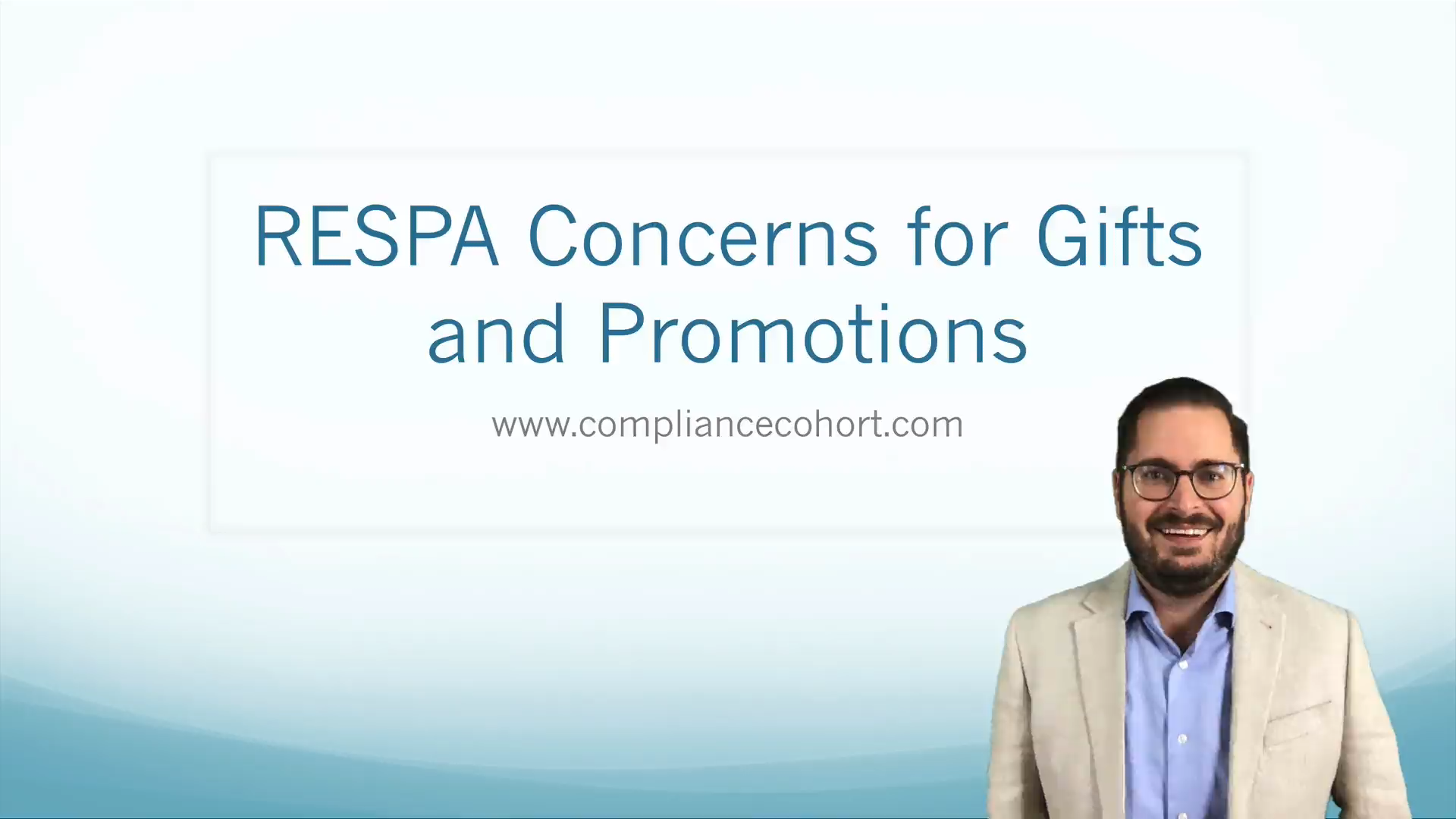
VIDEO: RESPA Concerns for Gifts and Promotions

In this Compliance Clip (video), Adam tells the story of a lender who basically bought her way into the hearts of the Realtors in her area. And the CFPB answers the question of whether gifts and promotions are appropriate for federally related mortgage loans. This is a must see video for lending teams.

On October 7, 2020, the Office of the Comptroller of the Currency (OCC) announced that they had assessed a $400 million civil money penalty (CMP) against Citibank due to deficiencies in enterprise-wide risk management, compliance risk management, data governance, and internal controls. In their release, the OCC explained that these measure were taken “based on the bank’s unsafe or unsound banking practices for its long-standing failure to establish effective risk management and data governance programs and internal controls.”

On 10/7/2020, the CFPB released fourteen new frequently asked Questions (FAQs) on their website. These FAQ are divided into four main categories including sections on general information, section 8(a), gifts and promotional activity, and marketing services agreements. In conjunction with the release of these FAQs, the CFPB also explained - in a blog post - that it is rescinding Compliance Bulletin 2015-05, RESPA Compliance and Marketing Services Agreements. In the blog post, the CFPB explained that the compliance bulletin does not provide the regulatory clarity needed on how to comply with RESPA and Reg X so, therefore, this guidance is being rescinded.

On October 1, 2020, the US Department of the Treasury issued a pair of advisories regarding ransomware. The first advisory was issued by FinCEN and is titled Advisory on Ransomware and the Use of the Financial System to Facilitate Ransom Payments. This advisory provides information on the role of financial intermediaries in payments, ransomware trends and typologies, and related financial red flags.

The second advisory was issued by OFAC and is titled Advisory on Potential Sanctions Risks for Facilitating Ransomware Payments. This advisory explains the sanctions risks associated with making ransomware payments. For example, some individuals or entities who install ransomware and demand payment are actually found on the OFAC list, making it illegal for businesses who get ransomware on their computers to pay these entities and regain access to their systems and data.

On 10/1/2020, the CFPB issued a formal review of its TRID rule, as required by the Dodd-Frank Act. To complete this required report, the CFPB began work on the assessment in early 2019 and solicited public comment on its research plan and other questions. The report begins with a message from Director Kathleen Kraninger, and she highlights some key findings and conclusions of the report.